



Nitric Acid CAS 7697-37-2 Properties, Production, Core Applications, Safety, and Procurement
Release time: 2026-08-30
Table of Contents
Why Nitric Acid is a Fundamental Pillar of Modern Industry
Nitric acid is a critical inorganic chemical raw material that possesses both strong acidity and powerful oxidizing properties. It stands as a foundational product in the nitrogen chemical industry chain, seamlessly connecting multiple sectors including ammonia manufacturing, ammonium nitrate fertilizers, nitration intermediates, metal surface treatment, and ultra-high-purity electronic chemicals.
Compared to other common inorganic acids like hydrochloric acid, sulfuric acid, or phosphoric acid, the true uniqueness of this chemical lies in its multifaceted nature. It does not merely provide an acidic environment; it is an exceptional oxidizing agent and the primary nitrogen source required for complex nitration reactions. In commercial and manufacturing scenarios, the intrinsic value of this acid is not solely determined by its concentration. For industrial users, its true worth is dictated by rigorous impurity control, color stability, free nitrogen oxide content, trace metal ion levels, packaging integrity, and the logistical safety capabilities of the supplier. Ultimately, it is not just an “acid,” but a vital process medium that directly influences reaction selectivity, equipment longevity, product purity, and overall operational safety.
What is Nitric Acid?
1. Basic Profile
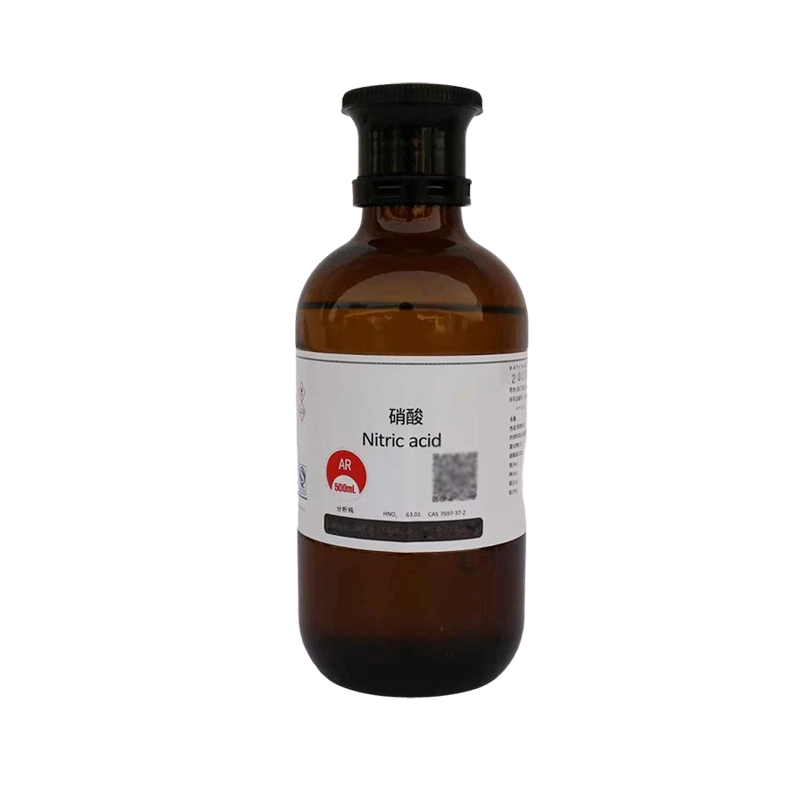
To facilitate quick reference for procurement professionals and technical engineers, the fundamental parameters of this chemical are outlined below. It typically manifests as a clear, colorless to pale yellow liquid, though it can appear yellow or reddish-brown depending on the concentration of dissolved nitrogen oxides. According to occupational safety data, it has a molecular weight of approximately 63, a melting point near -44 degrees Fahrenheit, and a boiling point of roughly 181 degrees Fahrenheit.
Table 1: Basic Parameters
| Parameter | Description |
|---|---|
| Common Name | Nitric Acid |
| Chemical Formula | HNO3 |
| CAS Number | CAS 7697-37-2 |
| Molecular Weight | 63.01 |
| Appearance | Colorless to pale yellow liquid; can be reddish-brown due to dissolved nitrogen oxides |
| Odor | Acrid, suffocating, and highly irritating odor |
| Common Concentrations | 50%–55%, 60%, 68%–70%, 98% (fuming) |
| Hazard Characteristics | Highly corrosive, strong oxidizer, corrosive to metals |
| Primary Uses | Fertilizers, nitrates, metal processing, nitration reactions, electronic chemicals |
2. Nomenclature and Common Classifications
Understanding the different grades and classifications is crucial to avoid costly procurement errors:
- Dilute: Generally refers to lower concentration solutions utilized for partial neutralization, basic pickling, general surface treatment, and standard chemical processes.
- Concentrated: The most common commercial specification in the market, typically ranging from 68% to 70%.
- Fuming: A highly concentrated form that emits visible smoke or fumes due to the release of nitrogen oxides. It possesses significantly higher reactivity and hazard levels.
- Red Fuming: A specific high-hazard category characterized by a reddish-brown color due to a high concentration of dissolved nitrogen dioxide.
- White Fuming: A highly concentrated fuming variant with relatively low levels of free nitrogen dioxide.
- Electronic Grade: A specialized category emphasizing ultra-low metallic impurities, minimal particulate matter, and strict anion/cation control. It primarily serves the semiconductor, display panel, and photovoltaic sectors for high-purity cleaning processes.
3. Differences from Other Inorganic Acids
For non-technical buyers, understanding how this acid compares to alternatives is vital for appropriate material selection.
Table 2: Comparison of Common Industrial Acids
| Dimension | Nitric Acid | Hydrochloric Acid | Sulfuric Acid | Phosphoric Acid |
|---|---|---|---|---|
| Acidity | Strong | Strong | Strong | Medium-Strong |
| Oxidizing Power | Very strong | None (Not an oxidizer) | Strong (when concentrated) | Weak |
| Typical Uses | Nitration, oxidation, passivation | Pickling, scale removal, pH adjustment | Fertilizers, dehydration, metallurgy | Phosphate fertilizers, food industry |
| Organic Risk | Can trigger violent oxidation/nitration | Primarily causes acid corrosion | Concentrated acid causes charring/dehydration | Relatively mild |
| Selection Focus | Oxidizing nature, NOx control, trace metals | Chloride ion impact, volatility | Heat generation, concentration, corrosivity | Purity, metal ions, food/electronic grades |
Physical and Chemical Properties and Reaction Behaviors
This section forms the technical foundation for understanding how the chemical behaves in real-world manufacturing environments.
1. Strong Acidity
In aqueous solutions, it is highly ionized, providing a potent acidic environment essential for neutralization, acid leaching, dissolving metal oxides, and preparing various salts. In practical manufacturing, even slight deviations in acid concentration can directly impact neutralization endpoints, nitration selectivity, dissolution capacity, and overall product yield.
2. Strong Oxidizing Properties
This is the most distinguishing factor separating it from standard mineral acids. Concentrated solutions can aggressively oxidize a wide variety of metals, inorganic reducing agents, and organic compounds. When mixed with combustible materials, reducing agents, alcohols, active metal powders, or certain organic raw materials, it can trigger violent and potentially explosive reactions. Consequently, on-site safety protocols must mandate strict segregation during storage and rigorous chemical compatibility management.
3. Decomposition and Nitrogen Oxide Generation
When exposed to heat, direct sunlight, or contaminants, the liquid can decompose to form nitrogen oxides, primarily nitrogen dioxide. A visual shift from colorless to yellow or reddish-brown usually indicates an accumulation of these oxides. This degradation affects the effective acidity, product color, vapor pressure, workplace air quality, and the stability of downstream processes. Storage tanks and packaging must incorporate ventilation, pressure relief, corrosion resistance, and exhaust gas absorption designs.
4. Interaction with Metals: Dissolution, Oxidation, and Passivation
This acid reacts uniquely with different metallic materials. For metals like copper and silver, it initiates an oxidation-reduction sequence resulting in the formation of corresponding nitrates. Conversely, for materials such as aluminum, chromium, and certain iron alloys, it can induce a phenomenon known as passivation under specific concentration and temperature thresholds, forming a protective oxide layer. However, “passivation” does not guarantee absolute safety; material compatibility is heavily influenced by flow rates, impurities, chloride presence, weld conditions, and mechanical stress.
5. Thermal Effects Upon Dilution
Diluting the concentrated acid is a highly exothermic process. Plant operators must strictly adhere to the principle of “slowly adding acid to water” to prevent localized boiling, violent splashing, and the generation of dangerous acid mists. Large-scale mixing systems require precision metering, automated cooling loops, closed-system feeding, and integrated interlock controls.
Industrial Production Processes
1. The Mainstream Route: The Ostwald Process
The global standard for manufacturing this chemical is the Ostwald process, which involves the catalytic oxidation of ammonia, the conversion of nitrogen oxides, and subsequent absorption.
The sequence begins by mixing ammonia gas with air and passing it over a platinum-based catalyst at high temperatures to produce nitric oxide and water. This nitric oxide is then cooled and further reacted with oxygen to form nitrogen dioxide. Finally, the nitrogen dioxide is absorbed by water in a specialized absorption tower to produce the acid, simultaneously generating secondary nitric oxide which is recycled back into the system.
2. Production Differences: Dilute vs. Concentrated
The direct output from the absorption tower is typically a medium-concentration product. If a manufacturer requires the 68%–70% commercial grade or fuming grades, the weak acid must undergo rigorous dehydration and concentration processes, often utilizing extractive distillation with sulfuric acid or magnesium nitrate. These high-concentration facilities demand superior equipment sealing, highly corrosion-resistant metallurgy, and advanced emission control systems.
3. Environmental Considerations and Green Manufacturing
A major challenge in industrial production is managing the environmental footprint. The ammonia oxidation stage can generate nitrous oxide, a potent greenhouse gas, while incomplete absorption leads to nitrogen oxide (NOx) emissions. Modern technological upgrades focus on high-efficiency absorption columns, catalytic NOx reduction, waste heat recovery, and continuous emission monitoring. For B2B clients, evaluating a supplier’s environmental compliance and waste management infrastructure is as important as checking their pricing.
Core Applications Across Industries
This chemical acts as a linchpin across diverse manufacturing sectors. Here are its core applications:
1. Fertilizers and Agrochemicals
It is an indispensable intermediate in the nitrogen fertilizer supply chain. It is utilized to manufacture ammonium nitrate, calcium nitrate, potassium nitrate, and magnesium nitrate. These compounds provide essential nitrate-nitrogen sources for greenhouse agriculture, drip irrigation, and specialized crop nutrition programs. Buyers in this sector prioritize concentration stability, low iron/copper impurities, and the supplier’s logistical capacity to deliver via bulk tankers.
2. Nitrate Salts and Inorganic Chemicals
By reacting the acid with metals, metal oxides, carbonates, or hydroxides, manufacturers produce a vast array of nitrate salts. Typical products include silver nitrate, copper nitrate, iron nitrate, and zinc nitrate. These derivatives are vital for catalysts, pigments, ceramics, glass manufacturing, and laboratory reagents.
3. Metal Pickling, Etching, and Passivation
In metal processing, it is used to strip oxide scales and inorganic residues from surfaces. It is a critical component in stainless steel pickling and passivation baths, often used synergistically with hydrofluoric acid. Safety Note: Metal treatment formulations should never be altered casually. When combined with hydrofluoric acid, the hazard level escalates dramatically, requiring specialized engineering controls, advanced PPE, and strict wastewater disposal protocols.
4. Fine Chemicals and Organic Synthesis
As a powerful nitrating and oxidizing agent, it drives the synthesis of aromatic compounds, dye intermediates, photographic chemicals, and pharmaceutical precursors. Because nitration is highly exothermic, process risk control is paramount. Facilities must ensure optimal feed rates, robust cooling capacities, efficient agitation, and comprehensive emergency relief systems to prevent runaway reactions.
5. Electronics, Semiconductors, and High-Purity Cleaning
Electronic grade variants are indispensable for semiconductor wafer cleaning, metal film etching, and wet chemical processes in photovoltaic panel manufacturing. In this sector, standard acidity is assumed; the true metrics of quality are the strict control of trace metals at the parts-per-billion (ppb) level, particulate elimination, total organic carbon (TOC) limits, and ultra-clean packaging protocols.
Uses and Selection of Different Concentrations
Choosing the correct concentration is vital for process efficiency and safety.
Table 3: Concentration Guide and Applications
| Type | Typical Concentration | Characteristics | Typical Applications |
|---|---|---|---|
| Dilute | < 30% | Clear acidic properties, moderate oxidation | Neutralization, basic pickling, salt preparation |
| Industrial | 50%–68% | Balanced acidity and oxidizing power | Fertilizers, general chemicals, metal treatment |
| Concentrated | 68%–70% | Standard commercial high-concentration | Nitration, heavy oxidation, fine chemicals |
| Fuming | > 86% | Extremely reactive, emits hazardous NOx fumes | Specialized chemical synthesis, aerospace |
| Electronic | Varies by grade | Ultra-low impurities, extreme quality control | Semiconductors, displays, photovoltaics |
Procurement Advice:
- For fertilizers: Focus on bulk pricing, stable supply, and transit radius.
- For metal treatment: Monitor chloride and iron ion levels to prevent surface defects.
- For fine organics: Demand strict control over free NOx and batch-to-batch consistency.
- For electronics: Only accept products with comprehensive trace-metal analysis and cleanroom-grade packaging.
Storage, Packaging, and Transportation
1. Storage Principles
Safe storage is non-negotiable. The acid must be strictly isolated from combustible materials, organic solvents, reducing agents, metal powders, and bases. Storage environments require robust ventilation, corrosion-resistant flooring, secondary containment bunding, and emergency shower facilities. Tanks, pumps, and gaskets must undergo rigorous material compatibility assessments before installation.
2. Typical Packaging Forms
- Small Containers: Glass or specialized plastic bottles for laboratories.
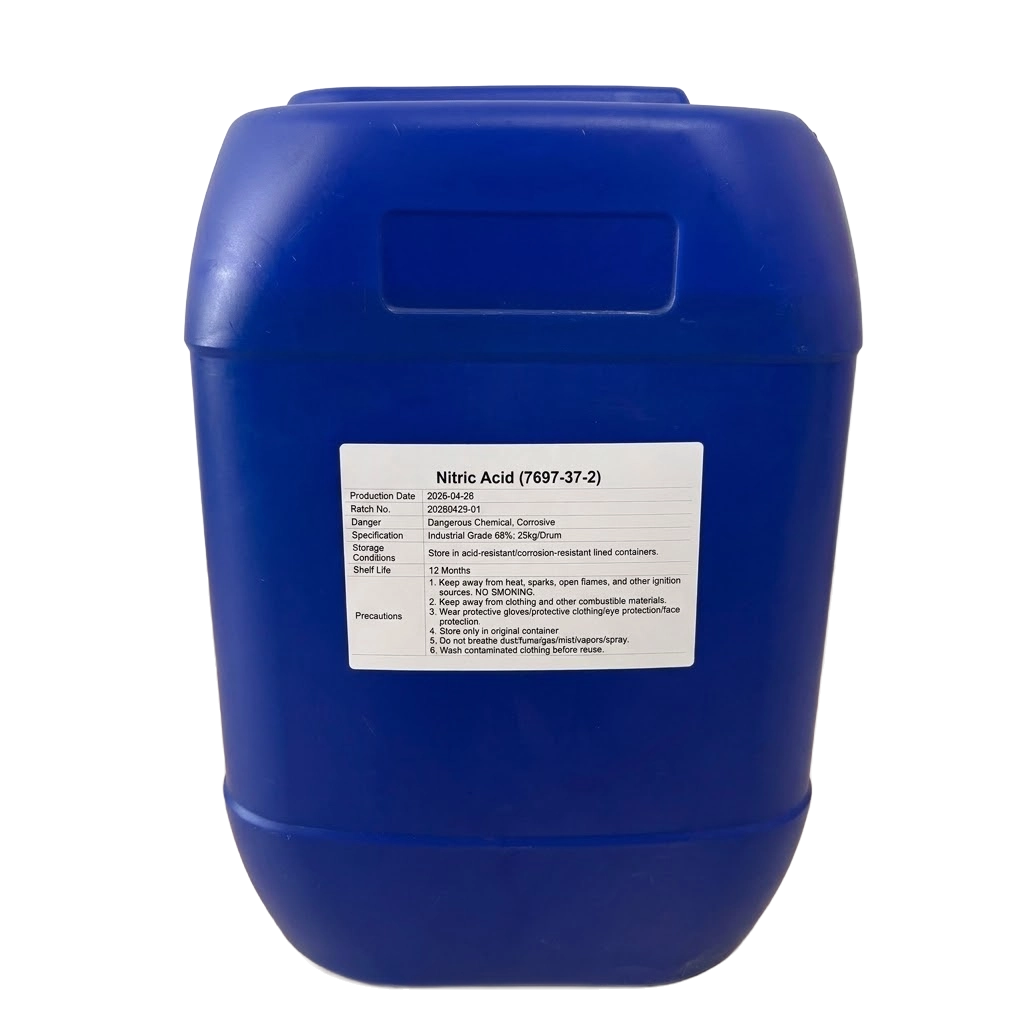
- Plastic Drums: Suitable for small to medium manufacturing sites.
- IBC Totes: Ideal for regional distribution and moderate volume consumption.
- Road Tankers: The standard for continuous, large-scale production facilities.
- ISO Tanks: Essential for cross-border trade and intermodal logistics.
3. Transportation and Regulatory Compliance
As a regulated hazardous material, transportation requires verified UN classification numbers, specific packing groups, and compliant hazard labeling. Exporters must ensure that the Safety Data Sheet (SDS) and transport appraisal reports align with the latest international maritime or road transit regulations.
Safety Risks and Occupational Health Management
Given its aggressive nature, rigorous safety management is required to protect personnel and assets.
1. Major Hazards
Direct contact causes severe, immediate corrosive burns to the skin and eyes. Inhalation of the vapor, acid mist, or resulting nitrogen oxides can inflict critical, sometimes delayed, respiratory tract damage. Furthermore, accidental mixing with incompatible organic materials can lead to catastrophic fires or toxic gas clouds. Occupational health agencies typically mandate an 8-hour permissible exposure limit of around 2 ppm for the vapor.
2. Personal Protective Equipment (PPE)
Workers must be equipped with verified acid-resistant chemical gloves, chemical splash goggles, full face shields, and acid-proof aprons or suits. In areas where vapor or NOx exposure is a risk, certified respiratory protection is mandatory.
3. Operational and Spill Response Framework
Facilities should utilize closed-loop transfer systems to minimize open handling. In the event of a spill, the area must be immediately isolated. Trained emergency responders wearing appropriate gear should secure the leak, prevent the chemical from entering drainage systems, and neutralize the spill using compatible absorbent materials and alkaline neutralizers, followed by hazardous waste disposal.
Quality Indicators, Inspection, and Documentation
For successful B2B sourcing, understanding exactly what to evaluate is critical. Procurement essentials dictate that buyers look beyond the price tag.
1. Common Quality Metrics
Standard Certificates of Analysis (COA) should detail:
- Mass fraction (concentration)
- Appearance and color/chroma
- Density
- Nitrous acid or free nitrogen oxide levels
- Chloride and sulfate limits
- Trace metal impurities (Fe, Cu, Na, Ca, etc.)
- Evaporation residue
2. Supplier Evaluation Dimensions
Table 4: Supplier Evaluation Criteria
| Evaluation Category | Key Questions for Buyers |
|---|---|
| Product Quality | Is the concentration stable? Are trace impurities strictly controlled? |
| Production Capacity | Can they guarantee continuous supply? Is there a backup delivery plan? |
| HSE Compliance | Do they possess robust hazard management and NOx emission control systems? |
| Logistics | Can they provide dedicated tankers, IBCs, or export-compliant ISO tanks? |
| Technical Support | Do they provide updated SDS, customized COAs, and rapid troubleshooting? |
Industry Trends and Future Outlook
The landscape of inorganic acid manufacturing is shifting. There is a surging demand for high-value, ultra-pure grades driven by the global expansion of semiconductor and advanced material manufacturing. Simultaneously, low-carbon initiatives are forcing manufacturers to invest heavily in N2O abatement and energy-efficient distillation technologies. Looking ahead, digital supply chain integration—featuring electronic COAs, vendor-managed inventory (VMI) via tank telemetry, and real-time transit tracking—will become the baseline for top-tier suppliers.
Conclusion
Nitric acid (CAS 7697-37-2) remains an irreplaceable catalyst for global industrial progress, bridging the gap between basic agricultural fertilizers and cutting-edge electronic components. Its dual nature as a potent acid and oxidizer demands profound respect and meticulous handling. For procurement and engineering teams, success relies on matching the precise chemical grade to the specific process, ensuring continuous supply chain reliability, and partnering with manufacturers who prioritize rigorous safety and environmental stewardship.
About ZCChem Nitric Acid CAS 7697-37-2
Contact us for more information on Nitric Acid CAS 7697-37-2
FAQs
Is nitric acid a strong acid, and what makes it different from others?
Yes, it is a strong acid that ionizes highly in aqueous solutions. However, what sets it apart from common acids like hydrochloric acid is its powerful oxidizing capability. This dual nature means its industrial material compatibility requirements and safety risks—such as violent reactions with organic matter—are significantly more complex than those of acids that only provide low pH environments.
Why does the acid sometimes turn yellow or reddish-brown during storage?
The liquid can decompose when exposed to elevated temperatures, direct sunlight, or chemical contaminants. This decomposition generates nitrogen oxides (specifically nitrogen dioxide), which dissolve back into the liquid, causing it to shift from colorless to yellow, orange, or reddish-brown. This color change indicates an increase in free NOx, which may affect product quality and process stability.
What are the most critical quality indicators to check when buying this chemical?
It depends entirely on your application. For agricultural and general uses, concentration stability and logistics are key. For metal surface treatment, buyers must monitor chloride and iron levels to prevent finishing defects. For fine chemical synthesis, free NOx and batch consistency are vital. Finally, for electronic applications, the absolute priorities are trace metal ions (at ppb levels), particulate control, and cleanroom-grade packaging.