



Phosphorous Acid CAS 13598-36-2: Chemical Properties, Industrial Applications, and Procurement Essentials
Release time: 2026-09-13
목차
1. What is Phosphorous Acid and Why is it Worth Attention?
In the vast landscape of industrial chemicals, Phosphorous Acid stands out as a highly versatile and chemically intriguing intermediate. Not to be confused with its fully oxidized cousin, phosphoric acid, this compound plays a pivotal and often irreplaceable role across multiple sectors, ranging from advanced agriculture to complex polymer manufacturing.
Why does this specific chemical command such attention from global procurement teams and chemical engineers? The answer lies in its unique reactive profile. As a dibasic acid with strong reducing capabilities, it serves as the foundational building block for an entire family of phosphite derivatives. In recent years, the shift towards more sustainable agricultural practices has massively driven the demand for phosphite-based biostimulants and fungicides. Simultaneously, the plastics industry relies heavily on its derivatives for polymer stabilization. For procurement professionals and technical managers, mastering the nuances of this chemical—from its tautomeric behavior to its strict storage requirements—is absolutely essential for ensuring supply chain stability, maintaining product quality, and optimizing manufacturing costs.
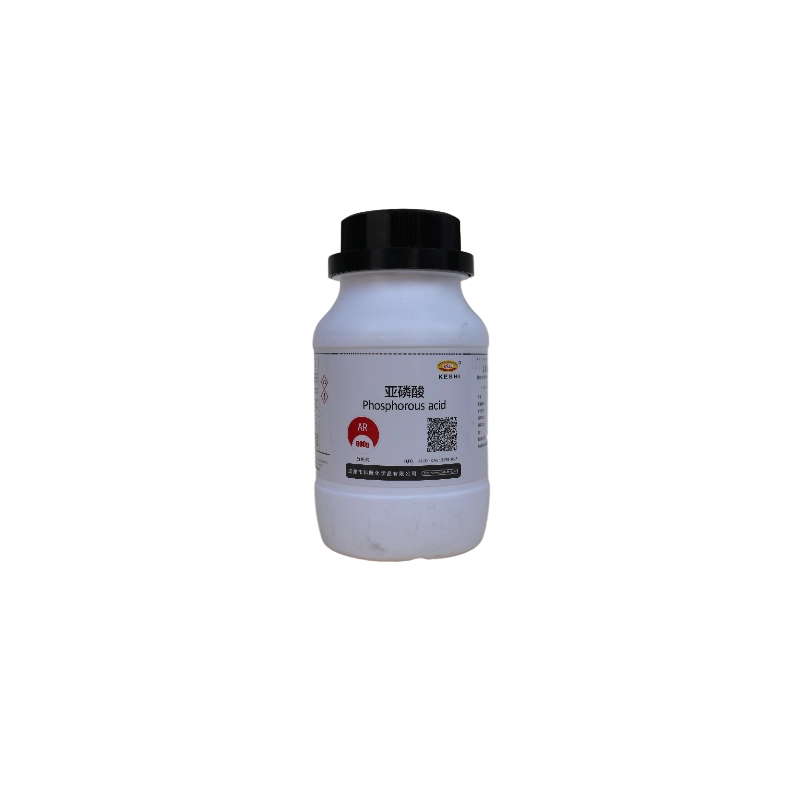
2. Basic Information: Nomenclature and Product Identification
Accurate identification is the first step in chemical procurement and regulatory compliance. The table below outlines the primary identifiers and standard nomenclature for this compound.
| 화학명 | Phosphorous Acid |
| IUPAC Name | Phosphonic Acid |
| Synonyms | Orthophosphorous acid; Trihydroxyphosphine |
| CAS 등록 번호 | 13598-36-2 |
| 분자식 | H3PO3 |
| 분자량 | 82.00 g/mol |
| EC / EINECS Number | 237-066-7 |
| 유엔 번호 | 2834 (Corrosive solid, acidic, inorganic, n.o.s.) |
3. Chemical Structure & Core Chemical Properties
Understanding the chemical behavior of this acid is crucial for its safe handling and effective application in downstream processes.
3.1 Molecular Structure and Tautomeric Characteristics
One of the most defining and frequently misunderstood characteristics of this acid is its molecular structure. In the solid state and in solution, it exhibits tautomerism, existing in an equilibrium between two forms. However, the equilibrium heavily favors the tetrahedral phosphonic acid form over the purely trivalent form.
The tautomeric equilibrium can be represented as: P(OH)3 ⇌ HP(O)(OH)2
While the formula is often written as H3PO3, the dominant species HP(O)(OH)2 contains one phosphorus-hydrogen (P-H) bond and two phosphorus-hydroxyl (P-OH) bonds. Because the hydrogen atom bonded directly to the phosphorus atom is not easily ionizable under standard aqueous conditions, the compound acts predominantly as a diprotic (dibasic) acid, rather than a triprotic acid. This structural nuance strictly dictates its stoichiometry when reacting with bases to form salts (phosphites).
3.2 Physico-chemical Properties and Procurement Significance
For procurement managers and chemical handlers, physico-chemical data is not just academic; it directly influences logistics, storage, and processing costs.
| 매개변수 | 값 | Practical Procurement & Operational Significance |
|---|---|---|
| Physical Appearance | White, highly deliquescent crystalline solid. | Requires strict moisture-barrier packaging. Buyers must ensure suppliers use high-quality PE liners to prevent product caking during maritime or long-haul transit. |
| 녹는점 | Approx. 73.6 °C (164.5 °F) | The relatively low melting point means extreme thermal exposure during transport can cause the product to fuse into unusable blocks. Temperature-controlled containers may be needed in extreme climates. |
| Boiling Point / Decomposition | Decomposes at approx. 200 °C (392 °F) | Cannot be distilled conventionally. Upon thermal decomposition, it yields toxic phosphine gas (PH3) and phosphoric acid. This dictates strict safety limits in heating applications. |
| Solubility in Water | Highly soluble (approx. 310 g / 100 mL at 20 °C) | Allows for easy formulation into highly concentrated aqueous solutions. If buyers face dissolution bottlenecks, purchasing pre-mixed liquid forms might be more economically viable. |
| 냄새 | Sour, slightly pungent (like garlic if impure) | A strong garlic odor can indicate trace impurities (like lower phosphorus oxides), serving as a rapid, albeit qualitative, quality control check upon receipt. |
3.3 Acidity and Reducing Properties
As a dibasic acid, it exhibits two primary dissociation constants: pKa1 ≈ 1.3 and pKa2 ≈ 6.7.
Beyond its acidity, its most industrially exploited property is its status as a robust reducing agent. It readily donates electrons to various species, and in the process, oxidizes to phosphoric acid (H3PO4). It aggressively reduces salts of noble and heavy metals (such as silver, copper, and mercury) to their elemental metallic state. This strong reducing nature must be accounted for during storage to prevent unwanted reactions with oxidizing agents.
4. Production and Supply Forms
4.1 Industrial Production Routes Overview
The most widespread and commercially viable route for synthesizing this chemical is the hydrolysis of phosphorus trichloride (PCl3). This exothermic reaction requires careful engineering controls.
The primary chemical equation is: PCl3 + 3H2O → H3PO3 + 3HCl
In standard industrial operations, liquid phosphorus trichloride is carefully introduced into water or a dilute acid solution. The immediate challenge in this route is the massive generation of hydrogen chloride gas. High-tier manufacturers employ sophisticated gas scrubbing and stripping technologies (often utilizing steam or inert gas sparging) to drive off the residual HCl. The extent of this purification directly impacts the final product’s quality. For buyers, the “residual chloride content” is a critical specification; excessive chlorides can act as corrosive poisons in sensitive downstream catalytic processes.
4.2 Common Supply Forms
Global suppliers generally offer the product in two primary formats, allowing procurement teams to choose based on their facility’s handling capabilities:
- Solid Crystalline (Flakes or Crystals): Typically offered at a purity of 98.5% to 99.0%. This form is highly cost-effective for long-distance shipping because buyers are not paying to transport water. However, it requires robust ventilation and humidity control during unpacking to prevent deliquescence and caking.
- Aqueous Solutions: Commonly supplied at concentrations of 50% or 70%. Liquid forms are favored by facilities that prioritize automated pumping systems and want to avoid the dusting, caking, and labor-intensive dissolution processes associated with the solid form.
5. Main Industrial Uses and Downstream Applications
The versatility of this acid allows it to bridge agricultural biotechnology, heavy industry, and fine chemical synthesis.
5.1 Phosphite Manufacturing
The most direct application is the neutralization of the acid to produce various phosphite salts (e.g., potassium phosphite, sodium phosphite, ammonium phosphite). Potassium phosphite, in particular, has seen explosive market growth. It is formulated extensively as an environmentally friendly, systemic fungicide and fertilizer. These salts enhance plant immunity against Oomycetes (such as downy mildew and Phytophthora) while simultaneously supplying vital potassium to the crops.
5.2 Agrochemicals and Pesticide Intermediates
Beyond simple salts, the acid is a critical intermediate in the synthesis of complex agrochemicals. A prominent example is the manufacturing of Fosetyl-aluminum (Fosetyl-Al), a broad-spectrum systemic fungicide used globally on fruit and vegetable crops. Additionally, it serves as a raw material in specific synthetic pathways for systemic herbicides, including derivatives related to the glyphosate family, making it an indispensable commodity for multinational agrochemical corporations.
5.3 Plastic Stabilizers and Polymer Additive Intermediates
The polymer industry heavily relies on the reducing properties of this chemical to protect plastics from thermal and oxidative degradation. It is a precursor for synthesizing lead phosphite and basic lead phosphite. These compounds are historically crucial thermal stabilizers for polyvinyl chloride (PVC), preventing the polymer backbone from degrading and discoloring during high-temperature extrusion and molding. Furthermore, it is utilized in synthesizing non-toxic, modern organic phosphite antioxidants, which scavenge free radicals and preserve the integrity of polyolefins and engineering plastics.
5.4 Water Treatment and Metal Treatment Intermediates
In the realm of industrial water management, the acid is reacted with amines and formaldehyde via the Moedritzer-Irani reaction to produce powerful phosphonic acids, such as ATMP (Amino Trimethylene Phosphonic Acid). These derivatives are elite scale and corrosion inhibitors. They function through a threshold effect, preventing the crystallization of calcium carbonate and calcium sulfate in cooling towers, boilers, and reverse osmosis desalination plants. In metal surface treatment, it acts as an intermediate for creating adhesion promoters and anti-rust formulations.
5.5 Reducing Agent and Fine Chemical Synthesis
In high-value fine chemical and pharmaceutical synthesis, it is deployed as a mild, selective reducing agent. It is utilized to reduce nitro groups, diazonium salts, and specific organic peroxides where harsher reducing agents might trigger unwanted side reactions. Furthermore, it serves as a catalyst and reactant in the synthesis of various organophosphorus compounds, flame retardants, and specialized lubricants.
6. Packaging, Storage, and Transport Recommendations
Proper logistics management is critical to prevent product loss and ensure safety.
- Packaging: The solid form must be packaged in highly moisture-resistant containers. The standard industry practice involves 25 kg multi-layer woven polypropylene bags featuring thick, sealed inner polyethylene (PE) liners. For bulk consumers, 500 kg or 1000 kg Flexible Intermediate Bulk Containers (FIBCs / Jumbo bags) with robust inner liners are used. Aqueous solutions are shipped in HDPE drums or IBC (Intermediate Bulk Container) totes.
- Storage: Warehouses must be cool, dry, and well-ventilated. The extreme hygroscopicity means any breach in packaging will lead to the product absorbing atmospheric moisture, turning into a slushy, acidic liquid. It must be strictly segregated from strong bases, oxidizing agents (like nitrates and chlorates), and reactive metals.
- Transport: Classified under UN 2834, Hazard Class 8 (Corrosive). Transport vehicles must be equipped to handle corrosive cargo, ensuring that bags are not punctured by forklifts or exposed to rain during loading and unloading.
7. Safety, Handling, and Environmental Management
Protecting personnel and the environment is paramount when handling this corrosive substance.
- Handling & PPE: Direct contact causes severe skin burns and serious eye damage. Inhalation of the dust or aerosols irritates the respiratory tract. Operators must wear full personal protective equipment (PPE), including acid-resistant gloves, chemical splash goggles, face shields, and appropriate respiratory protection in dusty environments. Emergency eyewash stations and safety showers must be immediately accessible.
- Environmental Management: While less immediately detrimental than heavy metals, discharging untreated phosphite/phosphonate waste into aquatic environments can eventually contribute to eutrophication once oxidized to phosphates. Spills should be contained, carefully neutralized with lime or soda ash, and disposed of in accordance with local hazardous waste regulations. Never flush bulk spills directly into municipal sewer systems.
About ZCChem Phosphorous Acid CAS 13598-36-2

| 목 | 사양 |
|---|---|
| 모습 | 흰색 결정성 고체 |
| 분석 (순도) | ≥ 98.5% |
| 녹는점 | 73°C |
| 휘발성 | 낮은 변동성 |
| 재 함량 | ≤ 0.1% |
| 용해도 | 물과 알코올에 매우 잘 녹는다 |
| 열 안정성 | 일반적인 조건에서는 안정하며, 200°C 이상에서 분해됩니다. |
Contact for more Phosphorous Acid CAS 13598-36-2 Datasheet
자주 묻는 질문
How do I distinguish this acid from Phosphoric Acid in terms of application and safety?
Chemically, Phosphorous Acid (H3PO3) is a strong reducing agent and a dibasic acid, primarily used to make agricultural fungicides (phosphites), plastic stabilizers, and water treatment chemicals. Phosphoric acid (H3PO4) is fully oxidized, tribasic, and is heavily used in food and beverage formulation, heavy-duty fertilizers (phosphates), and rust removal. Safety-wise, both are corrosive, but H3PO3 poses an additional risk of reacting with moisture to cake, and reacting with heat to release highly toxic phosphine gas, a risk not present with phosphoric acid.
What causes the solid product to turn yellow or agglomerate during storage, and how can it be prevented?
Agglomeration (caking) is almost exclusively caused by the product’s extreme hygroscopicity; it absorbs moisture from the air if the packaging liner is compromised. A yellow discoloration usually indicates either the presence of trace impurities (like heavy metals reacting over time) or minor thermal degradation if stored in excessively hot environments. To prevent this, ensure procurement mandates high-micron thickness PE liners, strictly enforce a “first-in, first-out” (FIFO) inventory system, and maintain a climate-controlled, dry warehouse environment.
Which supply form (solid vs. solution) is more cost-effective for large-scale procurement?
This depends heavily on your facility’s location and infrastructure. Solid flakes (98.5%+) are significantly cheaper to transport over long distances or internationally, as you are not paying freight costs for water. However, they require manual or mechanical unbagging and dissolving on-site, adding labor costs and dust-handling risks. If your facility is relatively close to the supplier and has bulk liquid storage tanks and pump systems, purchasing the 70% aqueous solution can drastically reduce labor, eliminate dusting hazards, and streamline your continuous manufacturing process, often offsetting the higher freight cost.