



Morpholine CAS 110-91-8: Molecular Structure, Synthesis, and Industrial Applications
Release time: 2026-08-31
Table of Contents
1. Introduction: The Strategic Position in Fine Chemicals
In the intricate and highly specialized world of fine chemicals, certain molecules serve as foundational building blocks that support multiple massive global industries. Among these, the nitrogen-oxygen heterocyclic compound under discussion occupies a uniquely strategic position. Characterized by its dual functional group nature—possessing both the characteristics of an amine and an ether—this compound acts as a critical “hub-type intermediate” across a vast industrial supply chain.
Its versatility is not merely a laboratory curiosity; it is a fundamental requirement for modern manufacturing. From serving as a vital component in the formulation of delayed-action accelerators in the rubber industry to acting as an indispensable volatile corrosion inhibitor in high-pressure steam boilers, its footprint is omnipresent. Furthermore, it plays an instrumental role in the synthesis of complex active pharmaceutical ingredients (APIs), advanced agrochemicals, specialized surfactants, and high-performance solvents.
The objective of this comprehensive guide is to systematically unravel the multifaceted nature of this industrial chemical. By deeply exploring its structural chemistry, physical properties, main synthesis pathways, rigorous safety and compliance requirements, and its expansive matrix of downstream applications, we aim to provide industry professionals, procurement specialists, and chemical engineers with a highly authoritative reference.
2. Basic Chemistry: Molecular Structure and Physicochemical Properties
2.1 Molecular Structure and Nomenclature
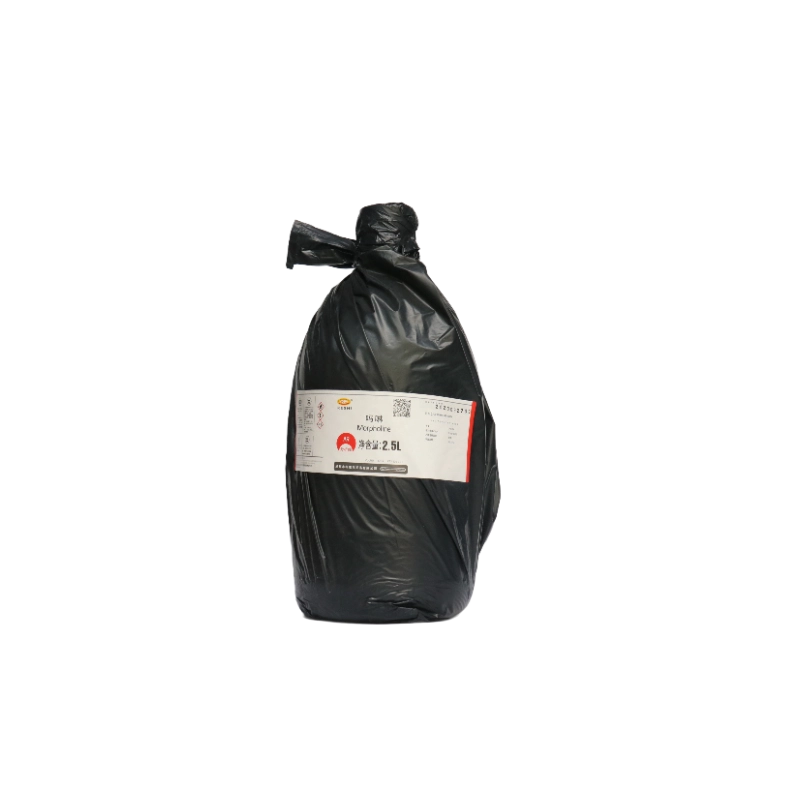
Under the nomenclature standards established by IUPAC, the chemical is officially designated as 1-oxa-4-azacyclohexane. It is globally recognized and tracked in chemical inventories under the registry identifier Morpholine CAS 110-91-8.
Structurally, it is a six-membered heterocyclic organic compound. What makes this structural configuration exceptionally valuable is the presence of two distinct heteroatoms positioned opposite each other within the ring: one nitrogen atom forming a secondary amine, and one oxygen atom forming an ether linkage. The empirical chemical formula is C4H9NO. This specific arrangement grants the molecule remarkable amphiphilic properties and dual reactivity. The ether oxygen contributes to its excellent solvent capabilities and water solubility, while the secondary amine nitrogen provides moderate alkalinity and serves as the primary reactive site for subsequent chemical transformations.
2.2 Physical Properties (Key Parameters for Industrial Operations)
Understanding the physical properties of this substance is critical for safe handling, storage, and optimization of industrial processes. It typically presents as a clear, colorless, and highly hygroscopic oily liquid. It possesses a distinct, penetrating amine odor that is frequently described as smelling similar to ammonia or having a slight fishy scent.
To provide a clear overview for engineering and operational reference, the critical physicochemical parameters are detailed in the table below:
| Property Category | Standard Value / Description | Operational Significance |
|---|---|---|
| Appearance | Colorless, hygroscopic liquid | Requires tightly sealed storage to prevent moisture absorption. |
| Boiling Point | 126 to 130 degrees Celsius | Suitable for high-temperature solvent applications and distillation. |
| Melting Point | -5 to 3.5 degrees Celsius | May solidify in very cold environments; requires heated tracing for winter transport. |
| Density (at 20 C) | Approximately 1.007 g/cm3 | Marginally heavier than water, aiding in specific gravity calculations. |
| Flash Point (Closed Cup) | 34 to 43 degrees Celsius | Classified as a flammable liquid; strict ignition source control is mandatory. |
| Solubility | Fully miscible with H2O, alcohols, ketones, aromatics | Exceptional versatility as a solvent; slightly soluble in mineral oils. |
| Alkalinity (pKa) | ~8.49 to 8.7 (conjugate acid) | A 1% aqueous solution yields a pH of approximately 11, indicating medium-strength basicity. |
2.3 Chemical Behavior and Reactivity
From a chemical reactivity standpoint, the secondary amine functional group is the most active site. It readily participates in a variety of fundamental organic reactions. It can react with acids to form stable salts, such as hydrochloride salts, which are often used when a solid, water-soluble form of the chemical is required. Furthermore, it easily undergoes acylation, alkylation, and condensation reactions, making it an ideal precursor for synthesizing more complex macro-molecules.
As a highly polar solvent, it has the unique ability to stabilize transition states during chemical reactions, making it a preferred medium for specialized organic syntheses, including enamine formation and the catalysis of aldehyde-ketone condensations.
One of its most defining physical characteristics is that its volatility profile is remarkably similar to that of water. When heated in an aqueous solution, it distributes evenly between the liquid water phase and the steam vapor phase. This uniform distribution coefficient is the core scientific principle behind its widespread use in boiler water treatment, ensuring that the protective alkalinity travels alongside the steam to every corner of a piping network.
3. Industrial Synthesis: From Raw Materials to Finished Product
3.1 Mainstream Synthesis Route
In the modern Western chemical industry and among major global manufacturers, the dominant and most economically viable production method is the catalytic amination of diethylene glycol (DEG).
This sophisticated process involves reacting diethylene glycol with ammonia gas. The reaction is conducted under elevated pressures and temperatures, typically in the presence of hydrogen gas and specialized metallic catalysts, such as those based on nickel or cobalt. Through a process of catalytic hydrogenation, cyclization, and dehydration, the linear DEG molecule is effectively “closed” around the nitrogen atom to form the six-membered heterocyclic ring.
While highly efficient, this process does yield byproducts. The most notable byproducts include piperazine and N-methyl derivatives. Because these byproducts have boiling points and polarities that require careful management, the crude product mixture must undergo a rigorous, multi-stage fractional distillation process to isolate the desired compound to high industrial purity standards.
3.2 Alternative Synthesis Pathways
Depending on regional availability of raw materials and specific economic conditions, alternative pathways are occasionally utilized. One such method involves the reaction of diethanolamine with an acid catalyst (like sulfuric acid) to induce dehydration and ring closure. Another historical route involves the reaction of ethylene oxide with ammonia.
The current trajectory in synthesis technology heavily emphasizes green chemistry. Chemical engineers are continuously developing more advanced, highly selective catalysts aimed at lowering the required energy input (temperature and pressure), significantly reducing the formation of unwanted byproducts, and minimizing the environmental footprint of the manufacturing process.
3.3 Purification and Industrial Specifications
For standard industrial applications, the acceptable purity level is exceptionally high, typically strictly maintained at greater than or equal to 99.0%. Quality control laboratories closely monitor several key indicators, including residual moisture content, color stability (often measured by the APHA color scale), and exact amine values.
Regarding packaging and storage, due to its alkaline and hygroscopic nature, it is primarily stored in stainless steel tanks or carbon steel containers lined with specialized anti-corrosive coatings. It must be kept in tightly sealed containers, protected from direct light, and stored far away from strong oxidizing agents and concentrated acids to prevent hazardous exothermic reactions.
4. Core Industrial Application Areas
4.1 The Rubber Industry (Primary Consumption Sector)
Accounting for approximately one-third of total global consumption, the rubber manufacturing industry is the single largest downstream sector for this chemical. It is fundamentally used as an intermediate to synthesize delayed-action vulcanization accelerators.
Prominent examples of these accelerators include NOBS (N-oxydiethylene-2-benzothiazole sulfenamide), OTOS, and MDS. In the complex process of rubber vulcanization, these specific accelerators play a transformative role. They provide a vital “delay” or scorch safety margin during the initial high-temperature mixing and milling of the rubber compound, preventing premature curing. Once the rubber is molded and reaches the curing temperature, they rapidly accelerate the cross-linking process. Furthermore, accelerators derived from this heterocycle are known to significantly improve the heat aging resistance of the final rubber product and actively inhibit “blooming” (the unwanted migration of sulfur to the surface of the rubber).
4.2 Water Treatment and Boiler Systems
In industrial settings where high-pressure steam is generated—such as thermal power plants, nuclear facilities, and large-scale chemical refineries—corrosion is a constant and expensive threat. Here, the compound acts as a premium Volatile Corrosion Inhibitor (VCI).
Water used in boilers often contains dissolved carbon dioxide, which forms corrosive carbonic acid when condensed. Because the volatility of this chemical matches that of water, when injected into the boiler system, it vaporizes with the steam. As the steam travels through kilometers of complex piping and eventually condenses, the chemical condenses alongside it. It immediately neutralizes the carbonic acid in the condensate return lines, effectively regulating the pH of the entire steam circuit and providing essential metal protection for iron, copper, and zinc infrastructure.
4.3 Pharmaceutical and Agrochemical Intermediates
The unique structural geometry of the molecule makes it a highly sought-after building block in life sciences. In the pharmaceutical sector, it is integrated into the molecular skeletons of numerous vital drugs, including specific classes of broad-spectrum antibiotics, advanced analgesic medications, local anesthetics, oncology therapeutics, and antimalarial formulations.
Similarly, the agrochemical industry relies on it heavily. It is a precursor for synthesizing highly effective systemic fungicides (which protect crops by absorbing into the plant tissue), selective herbicides, sophisticated plant growth regulators, and special coatings used for post-harvest fruit preservation.
4.4 Surfactants and Daily Chemical Formulations
Due to its amphiphilic nature, it is an excellent starting material for producing specialized surfactants. It is utilized in the synthesis of high-performance emulsifiers, optical brighteners for the paper and textile industries, and catalysts for polyurethane foam production. In the realm of daily chemicals, while its use is tightly regulated regarding residual limits, derivatives are found in heavy-duty degreasers, rust preventatives, textile dyeing auxiliaries, and certain cosmetic formulations where precise pH buffering is required.
4.5 Solvents and Reaction Media
As a polar aprotic solvent, it exhibits exceptional dissolving power. It is frequently employed to dissolve stubborn natural and synthetic resins, waxes, complex dyes, and casein. In fine organic synthesis, it serves as an ideal reaction medium due to its moderate polarity, relatively low cost, easily manageable boiling point for solvent recovery, and straightforward post-reaction processing.
4.6 Emerging and Niche Applications
Beyond the traditional sectors, continuous research has unlocked new niche applications. It is increasingly utilized as a specialized component in electroless plating baths, an advanced curing agent for epoxy resin systems, a highly selective flotation agent in the mining industry, and as a potent antioxidant and deodorizing compound in various industrial formulations.
5. Health, Safety, and Environment (HSE) Compliance
5.1 Toxicology and Human Health
While indispensable, the chemical must be handled with deep respect for its toxicological profile. It exhibits slight to moderate systemic toxicity but is highly irritating to living tissue. Direct contact will cause severe irritation or burns to the skin and eyes. Inhalation of its highly concentrated vapors can lead to significant respiratory tract irritation and potential mucosal damage.
Occupational exposure is strictly regulated worldwide. Most international safety agencies have established an 8-hour Time-Weighted Average (TWA) Occupational Exposure Limit (OEL) of approximately 70 mg/m3. Crucially, this is almost always accompanied by a “skin notation,” indicating that dangerous amounts of the chemical can be absorbed directly through intact skin, bypassing the respiratory system.
5.2 Storage, Transportation, and PPE Guidelines
Logistics and handling must comply strictly with international dangerous goods regulations.
| Safety Parameter | Classification / Requirement |
|---|---|
| UN Number | UN 2054 |
| Hazard Class | Class 8 (Corrosive Substance) with a Subsidiary Risk of Class 3 (Flammable Liquid) |
| Spill Containment | Must be stored on certified anti-leakage spill pallets in well-ventilated, isolated zones. |
| Personal Protective Equipment (PPE) | Mandatory use of heavy-duty chemical-resistant gloves (e.g., Butyl rubber), full-seal safety goggles, face shields, and appropriate vapor respirators during transfer operations. |
5.3 Environmental Behavior and Disposal
From an environmental standpoint, the compound is inherently biodegradable under aerobic conditions. However, high-concentration accidental spills or direct industrial discharges are highly toxic to aquatic life and will severely disrupt local ecosystems. Industrial wastewater containing this compound cannot be discharged directly into municipal sewers; it must first undergo rigorous on-site chemical neutralization and biological treatment.
For end-of-life disposal, any residual product or heavily contaminated packaging must be treated strictly as hazardous waste. It must be handed over to fully licensed and certified waste management contractors for high-temperature incineration or controlled chemical neutralization.
6. Market Dynamics and Supply Chain Overview
The global supply chain for this chemical is dominated by a few massive, integrated chemical conglomerates. Key global producers include industry titans such as BASF, Dow Chemical, and Sinopec, alongside several rapidly growing manufacturers in India and the Middle East who benefit from close proximity to raw material feedstocks.
The pricing matrix of the market is highly dynamic. It is primarily driven by the fluctuating costs of its foundational raw materials (diethylene glycol and ammonia), broader energy market prices, and the increasingly stringent costs associated with environmental compliance. Demand fluctuations in the downstream rubber industry (closely tied to global automotive tire manufacturing) and the booming new energy sector strongly dictate market pricing trends.
For industrial procurement teams, it is advised to look beyond mere price. Comprehensive evaluation of a supplier should include strict verification of Technical Data Sheet (TDS) parameters (specifically purity, moisture, and color), immediate acquisition of the latest Safety Data Sheet (SDS), and requirement of a Certificate of Analysis (CoA) per batch. Furthermore, auditing a supplier’s long-term Environment, Health, and Safety (EHS) compliance record is crucial to ensure supply chain resilience.
7. Technology Frontiers and Future Trends
The future trajectory of this chemical’s industrial lifecycle is deeply intertwined with global sustainability goals. The foremost technological frontier is the pursuit of “Green Synthesis.” Researchers are heavily invested in developing ultra-high-selectivity catalytic systems that maximize atom economy, drastically reduce energy consumption, and virtually eliminate piperazine byproducts.
Furthermore, there is aggressive expansion into high-tech derivatives. N-alkyl derivatives and specific amide complexes are showing immense potential as advanced additives for lithium-ion battery electrolytes, specialized ionic liquids, and as structural precursors for Metal-Organic Framework (MOF) materials used in gas storage and separation.
Finally, the regulatory landscape is shifting. Frameworks like the European Union’s REACH and the United States’ TSCA are continuously tightening restrictions on chemical residues and volatile emissions. This regulatory pressure is not just a hurdle; it is the primary catalyst driving the industry toward developing lower-toxicity derivative alternatives and engineering fully closed-loop, zero-emission manufacturing processes.
About ZCChem Morpholine CAS 110-91-8
Contact us for more information on Morpholine CAS 110-91-8

FAQs
Why is this specific chemical preferred over other volatile amines for boiler water treatment?
The distinct advantage lies in its unique vapor-liquid distribution ratio. Unlike some other amines that either vaporize too quickly (leaving the liquid phase unprotected) or stay entirely in the liquid (leaving the steam pipes vulnerable), this compound’s volatility is almost perfectly matched with H2O. This ensures that as water boils into steam, the protective alkalinity travels with the steam and condenses at the exact same time and location, providing uniform, end-to-end anti-corrosion protection throughout complex piping networks.
What are the most critical safety precautions when storing this chemical in a manufacturing facility?
Because it holds a dual hazard classification (Class 8 Corrosive and Class 3 Flammable), storage requires a multi-layered safety approach. Facilities must ensure the chemical is kept in tightly sealed, corrosion-resistant containers (like stainless steel) away from any direct sunlight or heat sources. The storage area must be equipped with explosion-proof ventilation, dedicated spill containment pallets, and completely isolated from strong oxidizing agents and acids, which could trigger violent reactions.
How exactly does this chemical function to prevent “scorching” in rubber processing?
During rubber manufacturing, the rubber mixture must be heated to be molded, but if it vulcanizes (cures) too early during this shaping phase, the batch is ruined—a phenomenon known as scorching. When this chemical is used to create delayed-action accelerators (like NOBS), the accelerator remains chemically stable during the initial mixing temperatures. It acts as a thermal safeguard. Only when the mixture reaches the much higher, final curing temperature does the accelerator break down to release active compounds, ensuring rapid and controlled cross-linking exactly when desired.